
Grapevine Mold Remediation
IICRC S520 Grapevine mold remediation homeowners can verify — sealed containment, negative air, material removal, and independent lab clearance. Serving every Grapevine neighborhood from Silver Lake to Western Oaks and the surrounding North Texas suburbs.
IICRC Certified Grapevine Mold Remediation
Grapevine mold remediation property owners can actually verify — that is the entire reason this company exists. Grapevine Mold Remediation is a dedicated mold firm, not a general contractor with a mold division. Every technician is IICRC certified, every project follows the IICRC S520 Standard and the Texas Mold Assessment and Remediation Rules (TMARR), and no containment comes down until independent clearance sampling proves the air inside is as clean as the air outside.
North Texas grows mold differently than anywhere else. Summers run 95–105°F, so air conditioners run around the clock — and clogged condensate lines, sweating supply ducts, and oversized systems that cool without dehumidifying quietly feed growth behind walls. February hard freezes burst pipes. Blackland Prairie clay swells and shifts, cracking slabs and starting slow slab leaks. Spring storms open roofs. A mold remediation company Grapevine trusts has to understand every one of those moisture sources, because remediation that ignores the source always fails.
We also know Grapevine housing stock. Pier-and-beam homes in Silver Lake, Western Oaks, and East Grapevine hide humid crawl spaces that slab-on-grade suburbs never deal with, while newer slab homes hide plumbing leaks under concrete. That local knowledge produces faster diagnosis, tighter scopes, and the kind of black Grapevine mold remediation families can trust when health is on the line. When we say a property is clean, a third-party lab — not our own crew — is the one saying it.
Everything on this page about Grapevine mold remediation homes and businesses need — jump straight to any section: Call (817) 842-0916 for the Grapevine mold remediation homeowners trust.
We Don't Guess.
We Contain, Remove & Verify.
Every Grapevine mold remediation project runs the full IICRC S520 protocol — sealed containment, negative air pressure, HEPA filtration, complete material removal, and EPA-registered antimicrobial treatment. Nothing comes down until an independent Texas-licensed assessor confirms the air is clean. Every Grapevine mold remediation project ends with verified clearance documentation.
The Full IICRC S520
Remediation Process
This is what professional Grapevine mold remediation TX properties receive on every project — seven defined stages, each documented, none skipped. If a contractor's plan is "spray it and paint over it," that is not remediation. That standard guides our Grapevine mold remediation crews on every job.
1. Assessment & Moisture Mapping
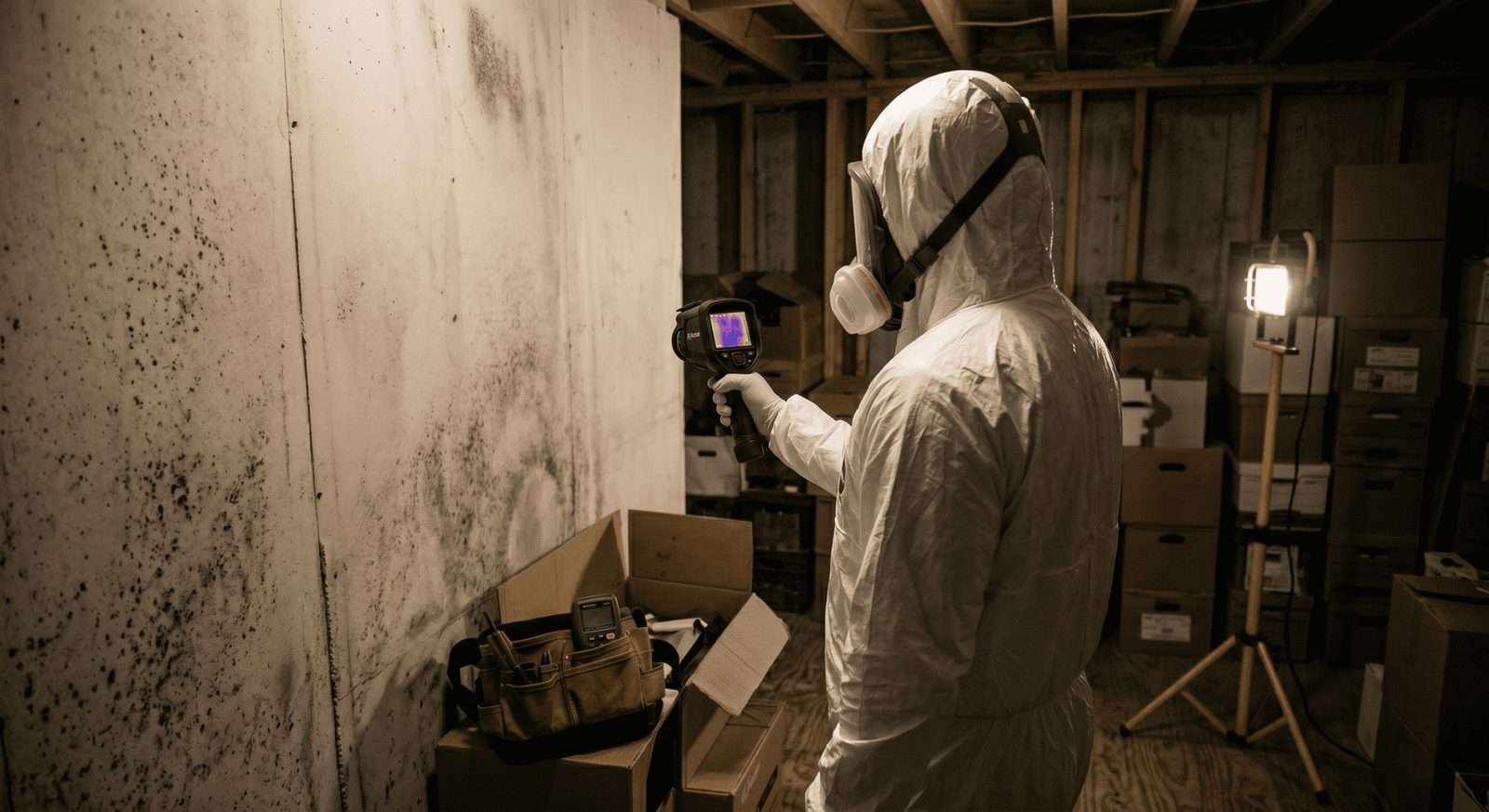
An IICRC certified inspector documents visible growth, then traces the water. Thermal imaging finds cold, wet spots behind drywall; pin and pinless moisture meters map how far saturation traveled. In Grapevine that trail usually leads to an AC condensate pan, a slab crack, or a February pipe burst. If sampling is needed to define the work area, an independent mold testing Grapevine assessor writes the protocol as TMARR requires.
2. Containment
The work area is sealed behind 6-mil polyethylene barriers with zippered airlocks. Supply and return vents inside the zone are blocked so the HVAC system cannot pull spores into the rest of the house — critical in Grapevine homes where central air runs ten months a year. Elevated-condition projects get decontamination chambers between the work zone and living space.
3. Negative Air & HEPA Filtration
Air filtration devices with true HEPA filters run continuously inside containment, exhausting filtered air outside the structure. This keeps the work zone under negative pressure, so any air leakage flows into the containment rather than out of it. Spores disturbed during demolition are captured at the source instead of migrating through the home.
4. Material Removal
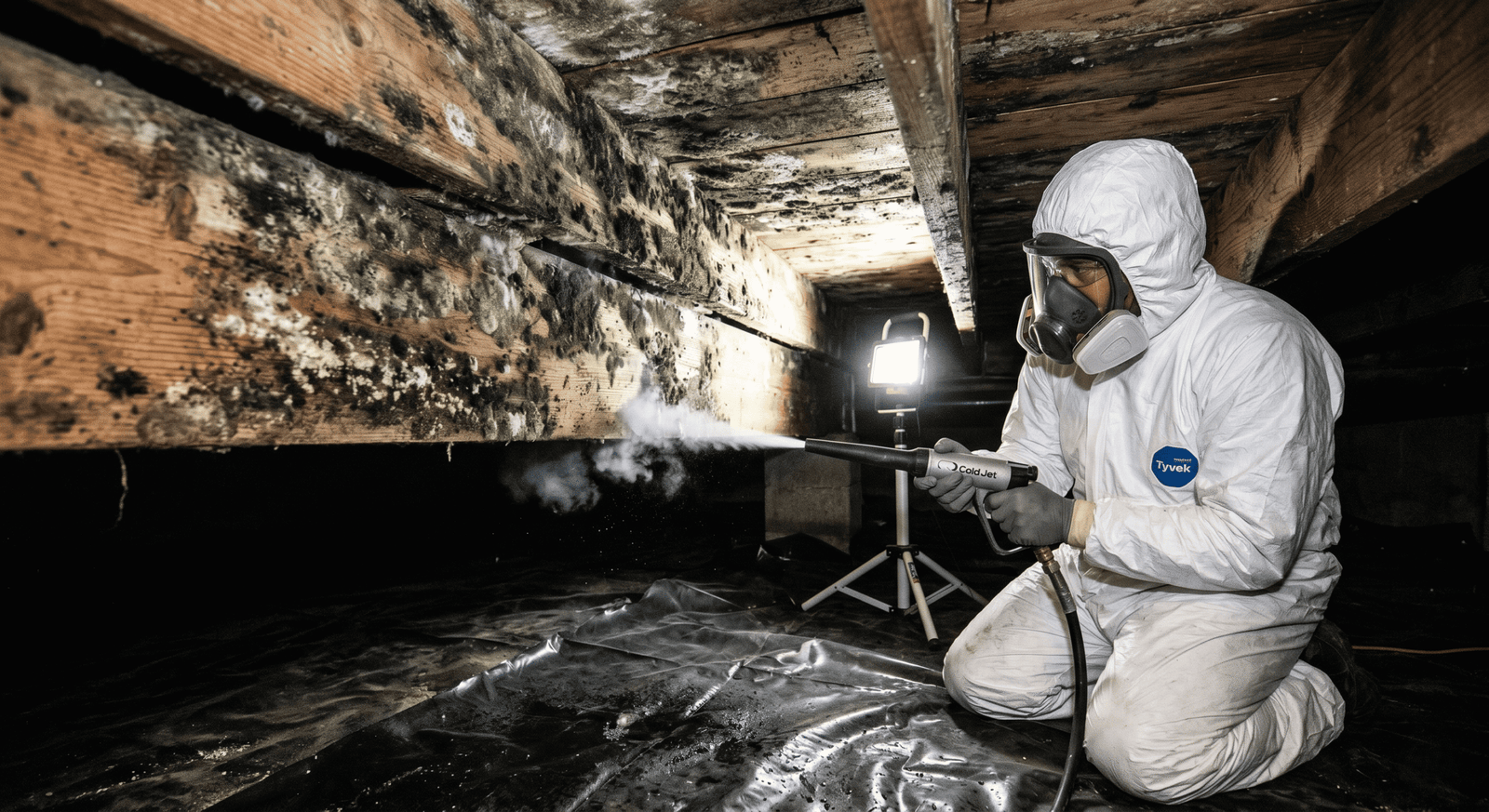
Porous materials that cannot be cleaned — contaminated drywall, insulation, carpet pad, ceiling tile — are cut out, bagged inside containment, and disposed of properly. Structural framing is HEPA-vacuumed, damp-wiped, and where growth penetrated the surface, abrasively cleaned. This material removal stage is the heart of S520: mold is physically removed, never merely killed and left in place.
5. Antimicrobial Treatment
Cleaned surfaces are treated with EPA-registered antimicrobials to address residual spores and inhibit regrowth while materials finish drying. Treatment is a supplement to removal, not a substitute for it — fogging an untreated cavity and calling it done is exactly the shortcut the S520 standard exists to prevent, and product documentation goes into your project file for the insurance record.
6. Clearance Verification
Containment stays up until clearance sampling proves the work succeeded. Under TMARR, projects over 25 contiguous square feet require a licensed mold assessor who is independent of the remediation contractor — your clearance is never graded by the crew that did the work. Passing projects receive a Certificate of Mold Damage Remediation, a document Texas buyers and insurers specifically look for.
7. Moisture-Source Correction
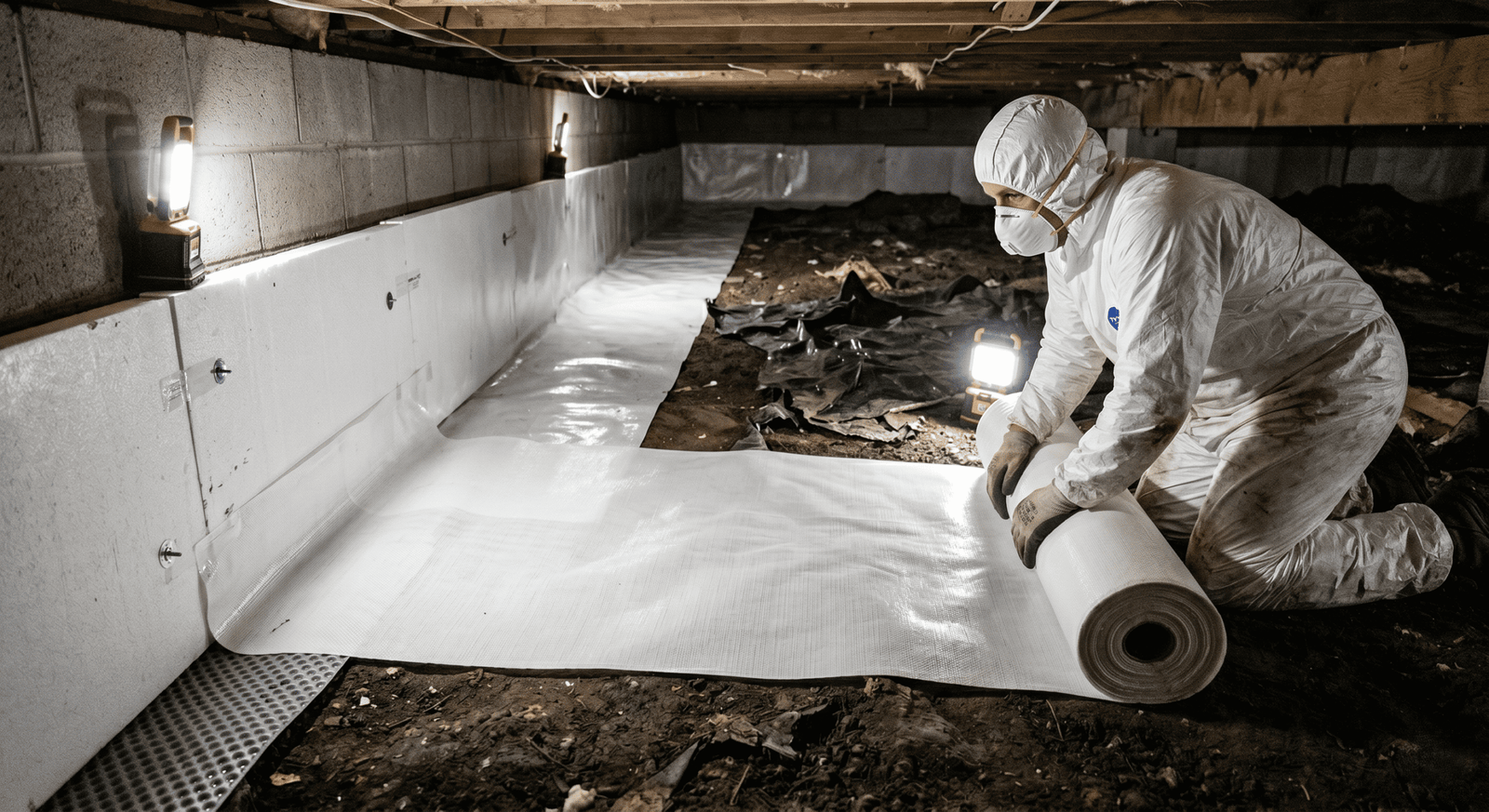
Every project closes with the fix that keeps mold from returning: condensate lines cleared and treated, duct sweating corrected, crawl space vapor barriers installed, and slab-leak or roof repairs coordinated. When the original cause is standing water or an active leak, our partner team at Grapevine water damage restoration handles extraction and structural drying so the moisture problem is solved, not postponed.
Why Grapevine Homes
Grow Mold
Effective Grapevine mold remediation wide starts with understanding the six moisture sources that drive nearly every job we run in North Texas. Per EPA mold guidance, growth can begin on damp materials within 24–48 hours.
AC Condensate & Summer Humidity
With 95–105°F summers, Grapevine air conditioners run nearly nonstop from May through September. Clogged condensate drain lines overflow into ceilings and closets, uninsulated ducts sweat inside attics, and oversized units short-cycle — cooling the air without wringing the humidity out of it. This is the single most common source behind the mold we remediate.
February Freeze Burst Pipes
North Texas hard freezes split supply lines in attics and exterior walls — and because many bursts happen while owners are away or asleep, water runs for hours. Weeks later, mold blooms inside the wall cavities that never fully dried. If your home took freeze damage, get a mold inspection Grapevine professionals perform with thermal imaging before closing up walls.
Slab Leaks & Blackland Clay Movement
Grapevine sits on expansive Blackland Prairie clay that swells when wet and shrinks in drought. That seasonal movement stresses foundations and the copper lines running under them, producing slow slab leaks that wick moisture up into sill plates, baseboards, and flooring. The first visible symptom is often a musty smell or cupped hardwood — the mold is already established by then.
Spring Storm Roof Leaks
Spring hail and straight-line winds open roof penetrations and lift shingles across the Metroplex. Water follows framing into insulation and ceiling drywall, where attic heat incubates growth fast. After any storm claim, the mold question should be answered with sampling — not assumed away — before the roofer's repair seals damp material inside the attic.
Pier-and-Beam Crawl Spaces
Older homes in Silver Lake, Western Oaks, East Grapevine, and the Cannon stand on pier-and-beam foundations with vented, earthen-floor crawl spaces. Humid North Texas air condenses on cool joists and subfloor, feeding growth that migrates up into the living space. Slab suburbs skip this problem — but pier-and-beam neighborhoods need vapor barriers and drainage correction, not just cleaning.
HVAC & Duct Spread
Once mold establishes in an air handler or duct run, the blower distributes spores to every room — which is how a single condensate leak becomes a whole-house problem. Any competent Grapevine mold remediation plan has to include HVAC evaluation, and where the system is contaminated, containment-based duct cleaning and coil treatment before clearance.
Mold Services in
Grapevine TX
From first air sample through TMARR clearance certificate — one accountable team for the entire mold problem. It is complete Grapevine mold remediation property owners can manage under one roof, residential and commercial alike.
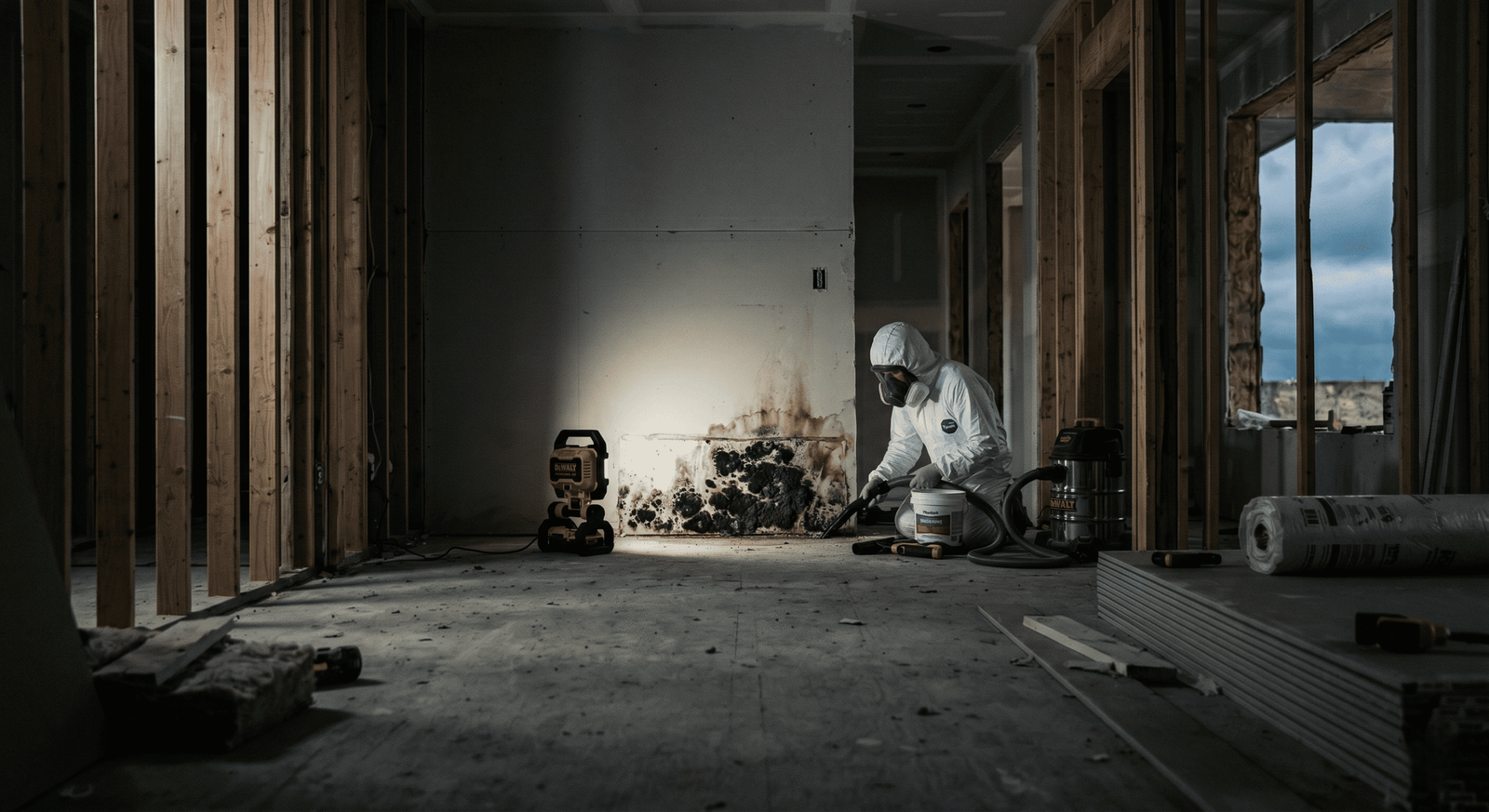
Grapevine Mold Remediation TX
Full IICRC S520 protocol — sealed containment, negative air, HEPA filtration, material removal, EPA-registered treatment, and independent clearance under TMARR. Written scope before any work begins, and a Certificate of Mold Damage Remediation when it passes.
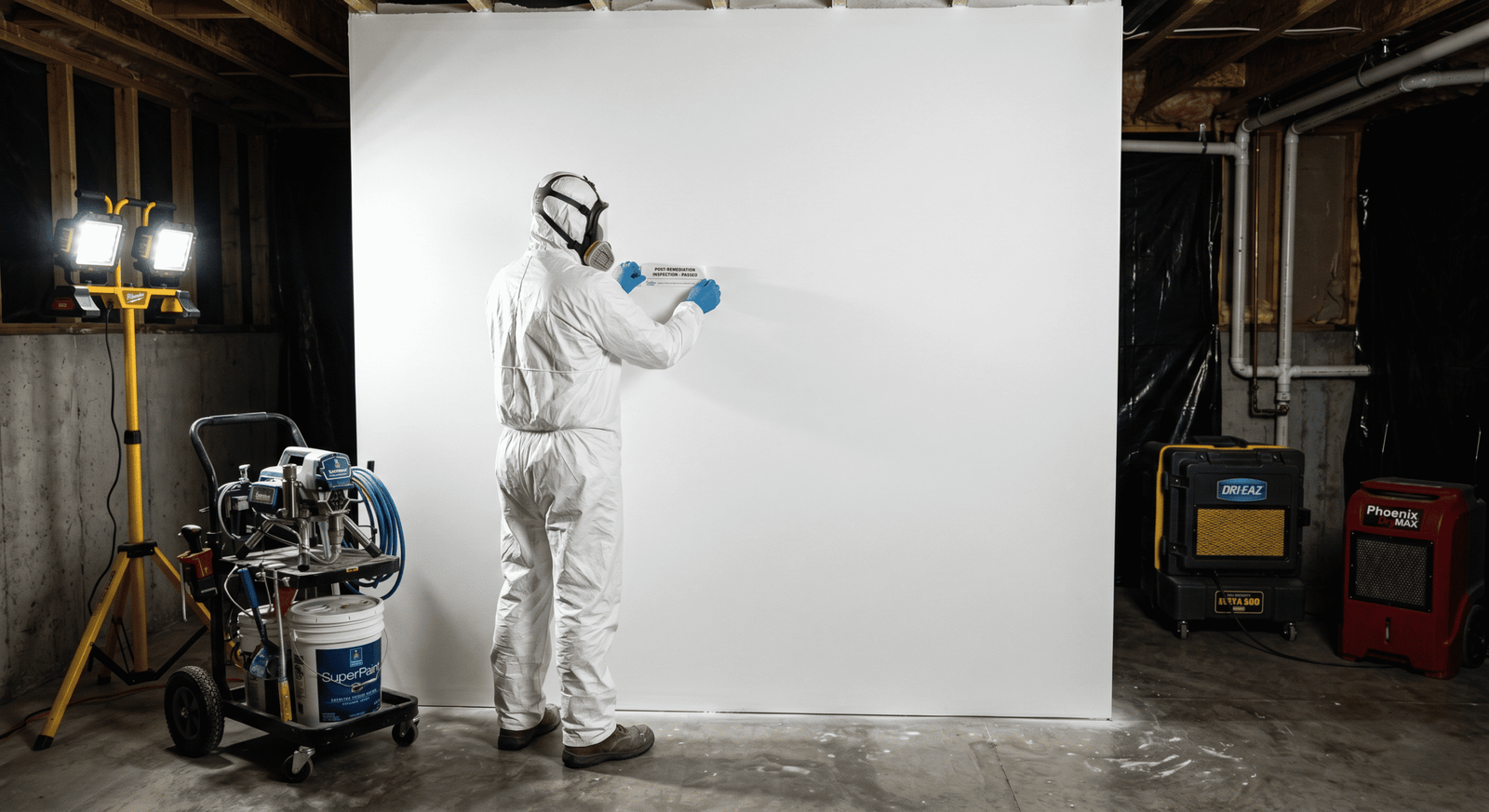
Black Grapevine Mold Remediation
Stachybotrys and other toxigenic species demand elevated containment, full PPE, decontamination chambers, and specialized disposal. The careful black Grapevine mold remediation families need when a slow leak has been feeding growth inside a wall for months.
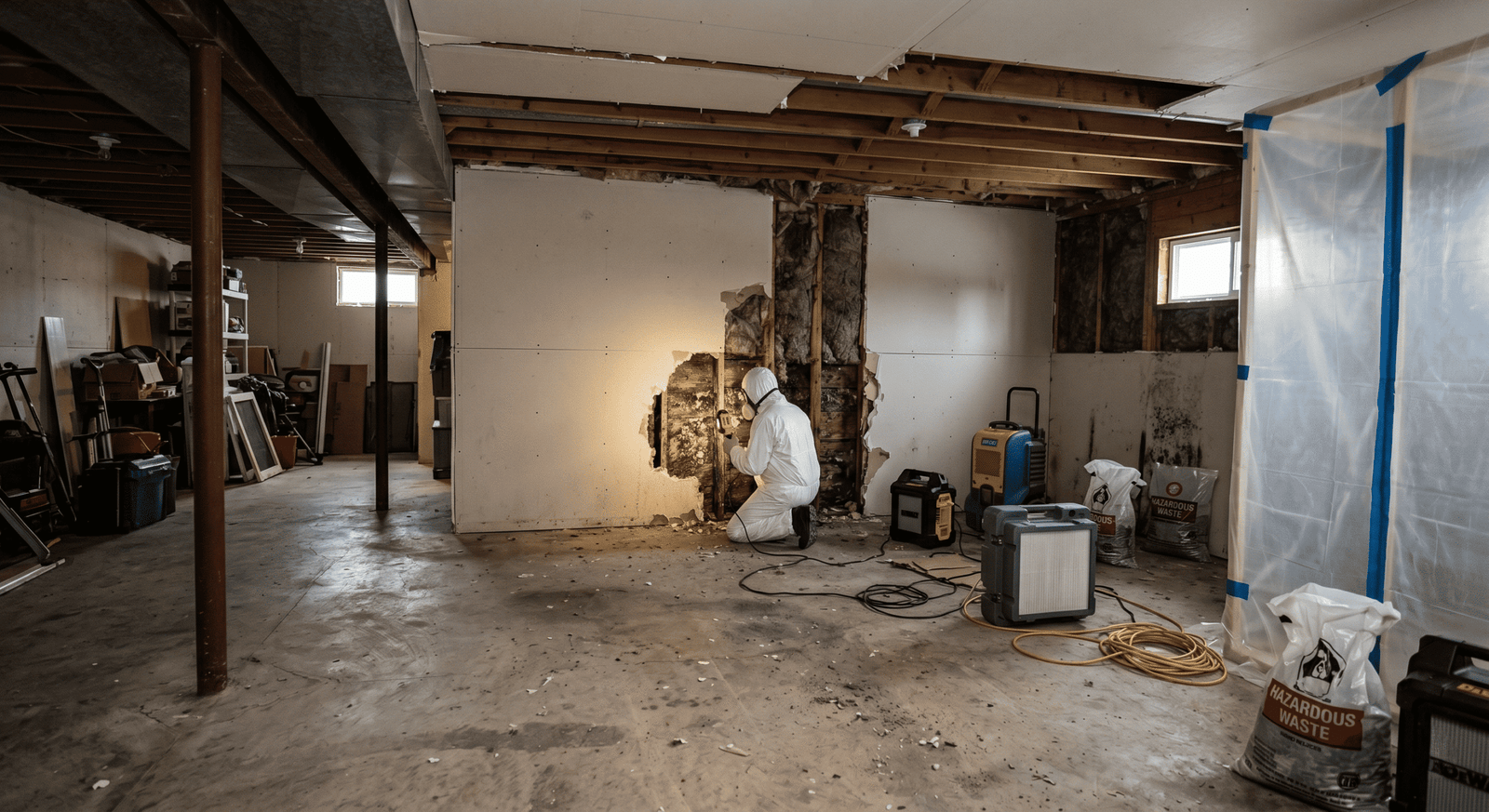
Mold Testing & Air Sampling
Air sampling, surface sampling, and ERMI panels analyzed by an accredited laboratory, with a written report you can actually read. Performed by a Texas-licensed assessor independent of the remediation crew — exactly as TMARR intends.
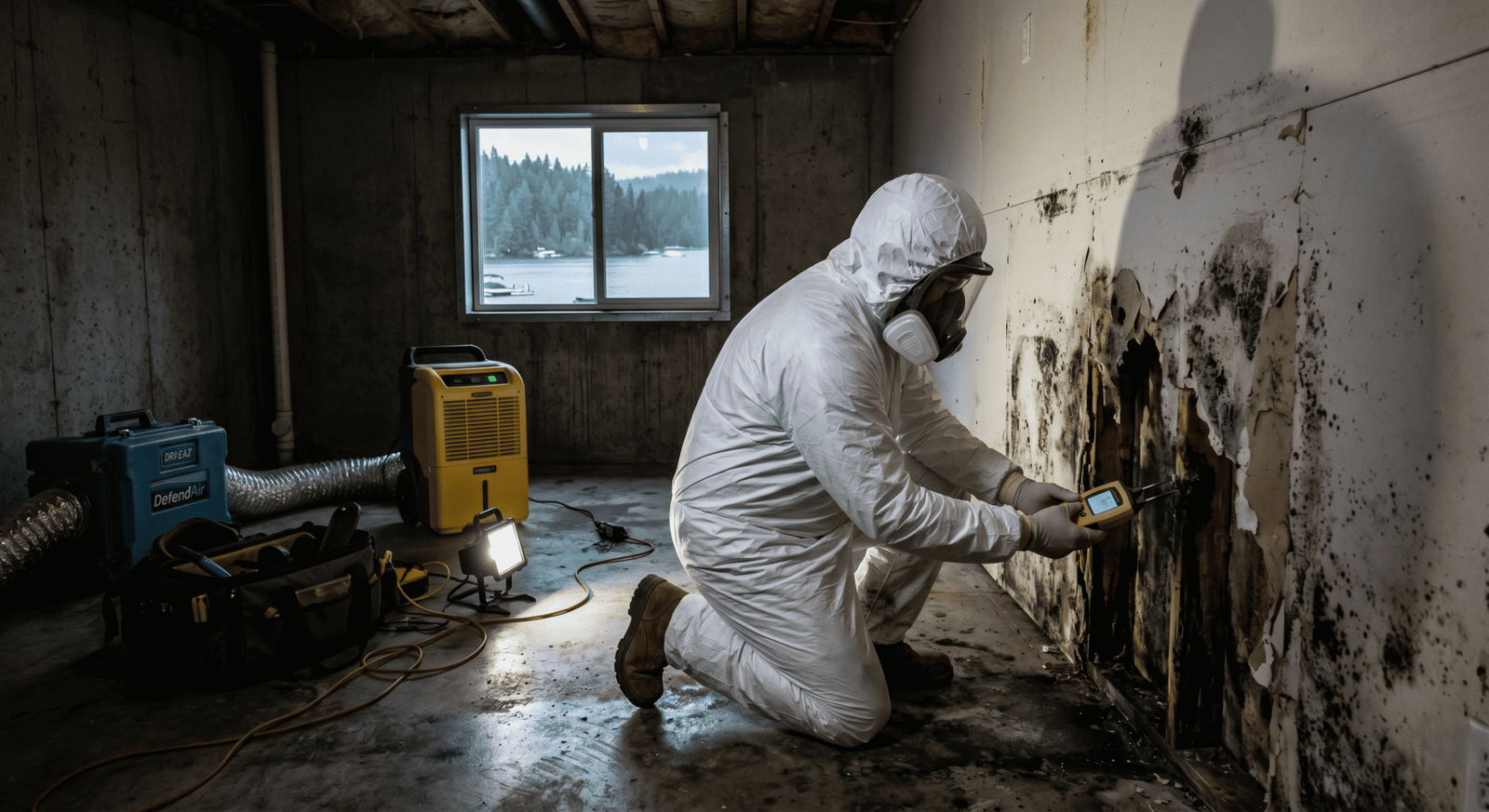
Mold Inspection & Moisture Mapping
Thermal imaging, moisture metering, and visual assessment that finds hidden growth inside wall cavities, under floors, and above ceilings — before demolition, a real-estate closing, or an insurance claim locks in the wrong scope.
HVAC & Duct Mold
Air handler, coil, and duct decontamination for the systems that spread a single condensate leak through the whole house. Containment-based cleaning, EPA-registered coil treatment, and post-cleaning verification so the system stops re-seeding the home.
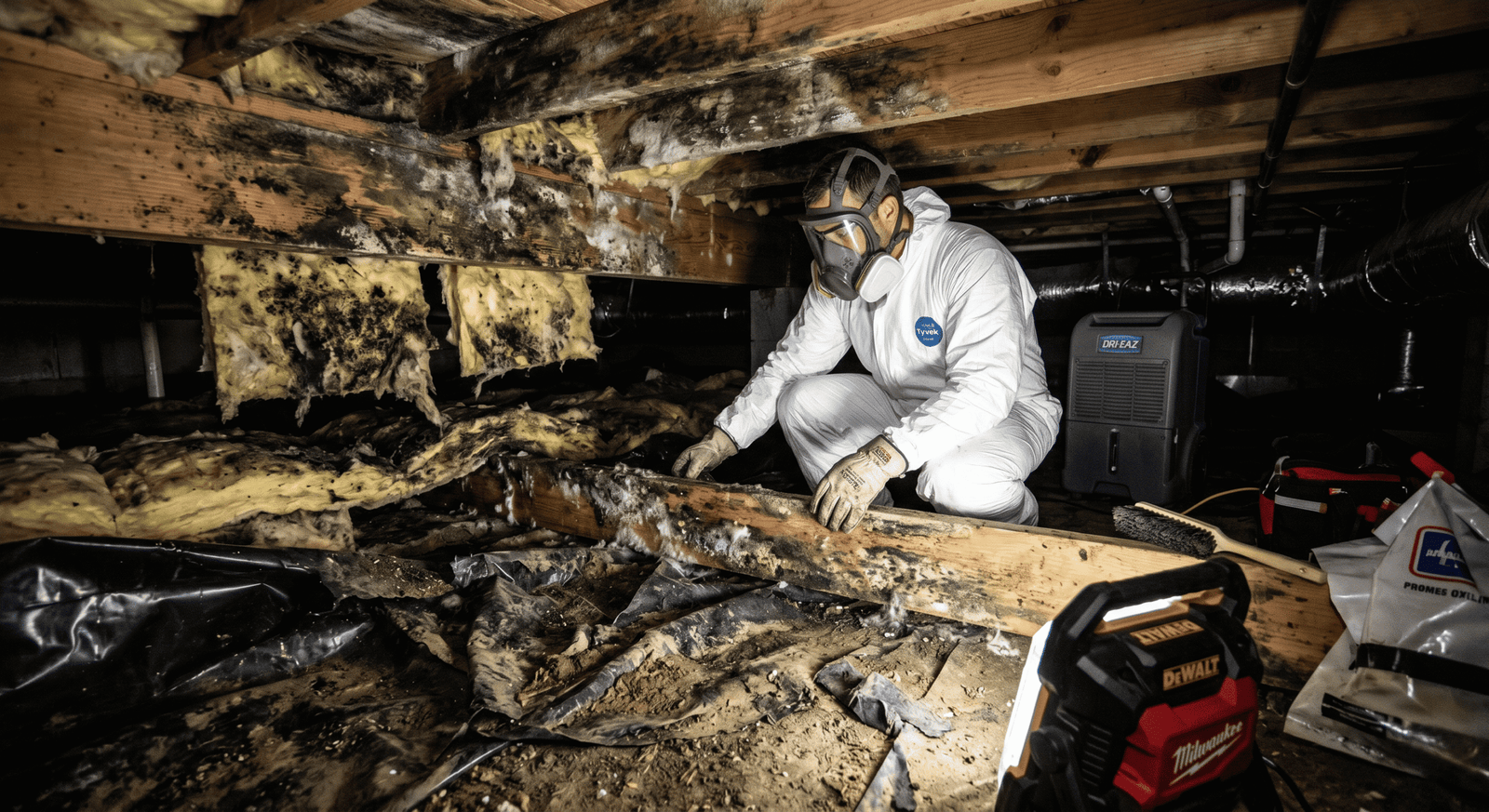
Crawl Space & Pier-and-Beam Mold
Joist and subfloor remediation plus vapor barrier installation and drainage correction for Silver Lake, Western Oaks, and East Grapevine pier-and-beam homes. We eliminate the humid crawl space environment instead of just wiping the visible growth.
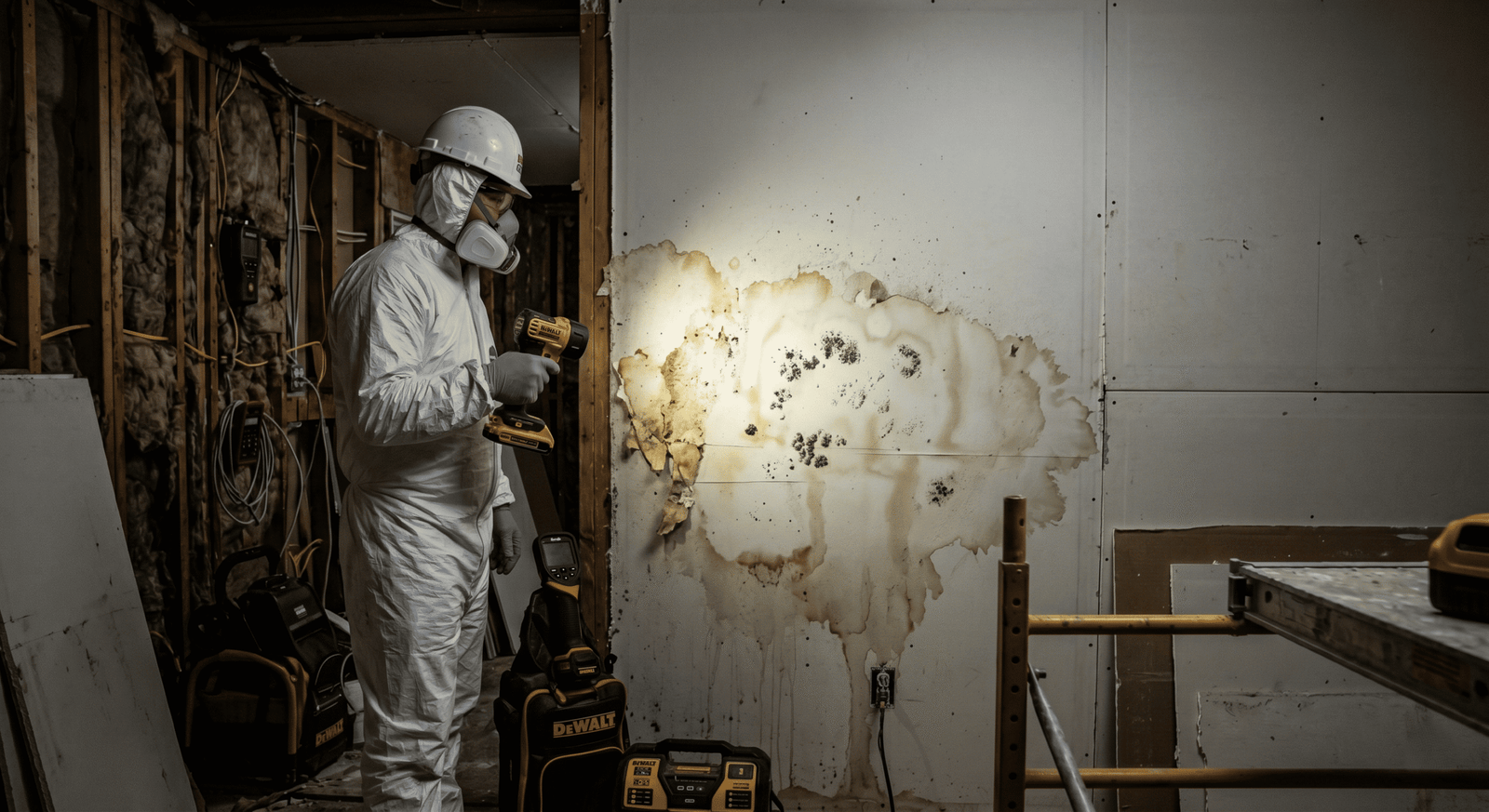
Before & After
Every Grapevine mold remediation project is documented from first assessment through independent clearance. This Timberline home went from active Stachybotrys behind two bathroom walls — fed by a slow slab leak — to passing clearance in five days.
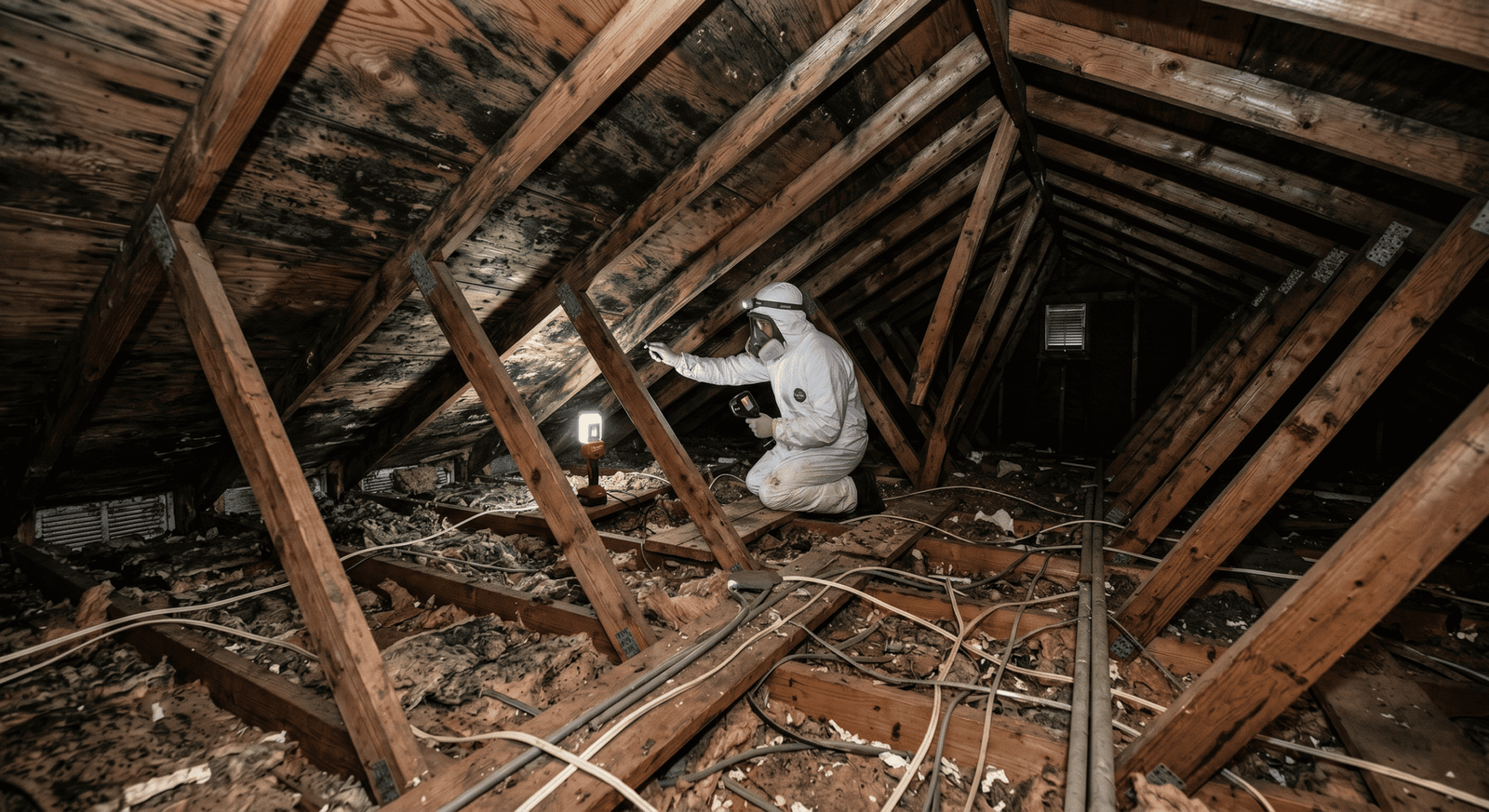
Inside Real Grapevine
Mold Projects
Real Grapevine mold remediation TX projects — containment, sampling, material removal, and verification across the Metroplex, from pier-and-beam crawl spaces to high-rise HVAC systems.
Mold, Your Health &
Your Texas Policy
Mold exposure is linked to nasal and sinus irritation, coughing, wheezing, and asthma flare-ups — with stronger reactions in children, seniors, and anyone immunocompromised, per the CDC. When a family's symptoms improve every time they leave the house, hidden growth belongs on the shortlist. Proper Grapevine mold remediation physicians can point to — with containment and verified clearance — is how you remove the exposure rather than redistribute it.
On the insurance side, most Texas homeowner policies cover mold when it results from a sudden, covered water event: a February burst pipe, an AC condensate overflow, a storm-created roof opening, or many slab leaks. Long-term neglect is excluded — which makes fast documentation everything. We photograph, moisture-map, and scope the loss in the format Texas adjusters expect, and our clearance certificate closes the claim file cleanly.
Businesses face the added pressure of tenants, employees, and liability. The commercial Grapevine mold remediation offices, restaurants, medical suites, and multifamily buildings require means after-hours containment, phased work zones, and paperwork that satisfies the landlord, the carrier, and the health inspector at once. One accountable mold remediation company Grapevine businesses can call — assessment through clearance certificate — is exactly what we built.
What Grapevine Homeowners
Say About Us
"A February freeze burst a pipe in our attic and by spring we could smell mold in two bedrooms. They had a written scope to our adjuster within 24 hours of the assessment, contained and remediated in four days, and the independent clearance passed on the first try. The insurance process was painless because their documentation was airtight."
"Pre-purchase inspection found mold under our 1938 pier-and-beam in Western Oaks and we nearly walked. They assessed inside our option period, gave us an honest scope, remediated the joists, and installed a vapor barrier. We closed on time and the crawl space now tests cleaner than the outdoor baseline. Cannot recommend them enough."
"Our AC condensate line clogged and drained into a hallway closet all summer. By the time we found it, mold was in the ductwork and every room smelled musty. They contained the closet, remediated, cleaned the HVAC system, and fixed the drain line so it cannot happen again. Clearance report in hand a week later."
Grapevine Mold Remediation
& North Texas
Same-day Grapevine mold remediation assessment available across the city and inner suburbs. TDLR licensed and insured throughout Texas.
Same-Day Mold
Assessment
IICRC certified Grapevine mold remediation technicians serving the whole Metroplex. Same-day assessment, written scope before work begins, no obligation. Call (817) 842-0916 or send the form.
Grapevine Mold Remediation TX
— FAQ
We handle the complete mold problem under one roof: mold testing (air sampling, surface sampling, ERMI panels), mold inspection (thermal imaging, moisture mapping, visual assessment), full IICRC S520 mold remediation, black mold remediation, HVAC and duct mold cleaning, and crawl space remediation for pier-and-beam homes. We serve all of Grapevine — Silver Lake, Western Oaks, East Grapevine, North Grapevine, Timberline, Vineyards — plus surrounding North Texas suburbs.
Same-day assessment is available throughout Grapevine and the surrounding suburbs. For urgent situations — significant visible growth, recent water damage, or occupant health concerns — call (817) 842-0916 directly and we will prioritize your assessment. We maintain availability seven days a week for emergency situations in our primary Grapevine service territory.
Yes. Texas is one of the few states that licenses mold contractors: the Texas Department of Licensing and Regulation (TDLR) requires a Mold Remediation Contractor license under the Texas Mold Assessment and Remediation Rules (TMARR). Our technicians are also IICRC certified, and every Grapevine mold remediation project follows the IICRC S520 Standard — the protocol recognized by insurance carriers, real estate professionals, and lenders.
Yes. Many Grapevine mold losses trace back to covered water events — February freeze burst pipes, slab leaks, AC condensate discharge, storm-driven roof leaks. We work directly with adjusters, provide IICRC-compliant documentation, and format project files to satisfy major Texas carriers. Our files include scope of work, thermal imaging, moisture readings, EPA-registered product documentation, and clearance results. No added fee for insurance coordination.
Grapevine summers run 95-105°F, so air conditioners run constantly — and clogged condensate lines, sweating ducts, and oversized units that never dehumidify are the number-one mold source we find. Add February hard freezes that burst pipes, slab leaks caused by Blackland Prairie clay foundation movement, spring storm roof leaks, and humid pier-and-beam crawl spaces in Silver Lake, Western Oaks, and East Grapevine, and North Texas homes face year-round moisture pressure.
Clearance testing is the final verification that remediation succeeded. Air samples collected inside the contained area are compared to outdoor baseline samples; if indoor spore counts are at or below outdoor levels, the area passes. Under TMARR, any Texas project over 25 contiguous square feet requires a licensed mold assessor who is independent of the remediation contractor to write the protocol and perform clearance — a consumer protection we build into every project.
Yes — if the moisture source is eliminated. Mold cannot grow without sustained moisture, so every project ends with source correction: clearing and treating AC condensate lines, referring slab-leak and foundation repairs, correcting attic and crawl space ventilation, and adding vapor barriers under pier-and-beam homes. Remediation with source correction is permanent; remediation without it is a temporary cosmetic fix.
Yes. Commercial Grapevine mold remediation businesses rely on requires after-hours containment, phased work zones, and documentation that satisfies landlords, tenants, and carriers alike. We remediate offices, restaurants, medical suites, retail, and multifamily buildings across Grapevine with minimal disruption to operations, and provide TMARR-compliant Certificates of Mold Damage Remediation for the property file.